Evals / tables / Workbook sheets
Export every sheet
Export every sheet of issues.xlsx to its own CSV in a folder called sheets.
The task
The reference answer shows the job can be done with deft. It is not an agent run.
deft sheet split issues.xlsx --sheets --to csv -o sheets/
Input
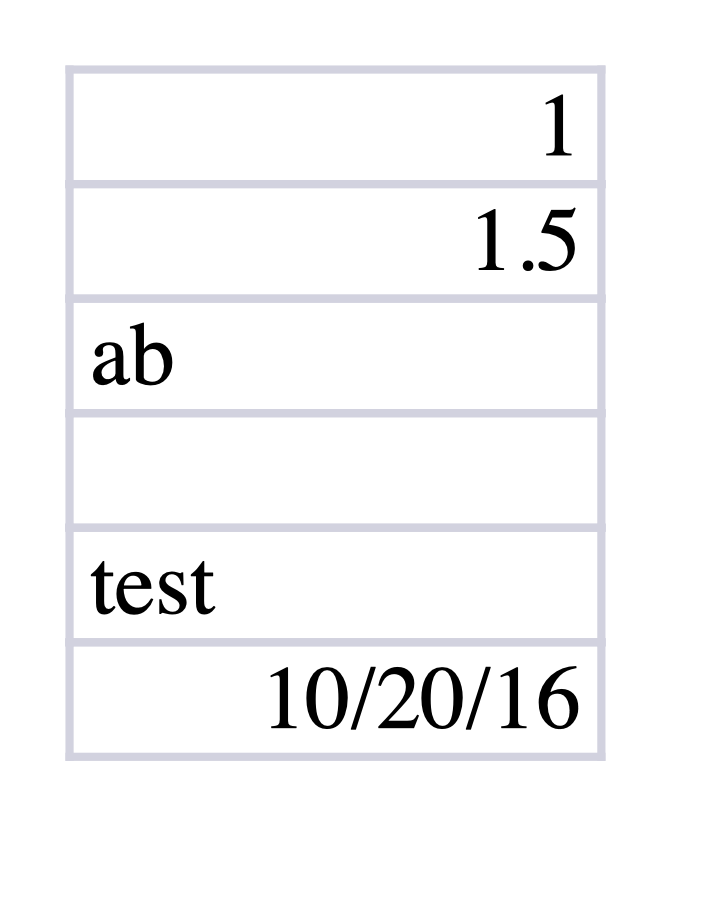
Reference output
0
1
1.5
ab
false
test
2016-10-20
| 1 | a |
| 2 | b |
| 3 | c |
0.5
1
2
ab
false
&
<
>
aaa ' aaa
""""
☺
֍
àâéêèçöïî«»
How a result is judged (1 check)
- count_files: glob = "sheets/*.csv", count = 6
Runs
CodexWithout deftPassed2026-11-07
- Time
- 39s
- New tokens
- 7.8k
- Total input
- 98.2k
- Output tokens
- 1.7k
- Commands
- 6
- Failed
- 1
Trace
I’ll inspect the workbook’s sheet names and export each sheet as a separate CSV under `sheets/` in the current directory.
ls -la && rg --files -g 'issues.xlsx' -g '*.xlsx'output
total 32
drwxr-xr-x@    3 user  staff     96 Nov  6 17:24 .
drwx------@ 1750 user  staff  56000 Nov  6 17:24 ..
-rw-r--r--@    1 user  staff  13571 Nov  5 21:11 issues.xlsx
issues.xlsx
python3 -c 'import openpyxl; print(openpyxl.__version__)' (exit 1)output
Traceback (most recent call last):
  File "<string>", line 1, in <module>
ModuleNotFoundError: No module named 'openpyxl'
command -v libreoffice || command -v soffice || command -v xlsx2csv || python3 -c 'import pandas; print(\"pandas\",pandas.__version__)'output
pandas 3.0.2
python3 - <<'PY'
import zipfile
z=zipfile.ZipFile('issues.xlsx')
print('\\n'.join(z.namelist()))
PY
output
[Content_Types].xml
_rels/.rels
xl/_rels/workbook.xml.rels
xl/workbook.xml
xl/worksheets/sheet4.xml
xl/worksheets/_rels/sheet4.xml.rels
xl/worksheets/sheet2.xml
xl/worksheets/sheet3.xml
xl/sharedStrings.xml
xl/worksheets/sheet1.xml
xl/worksheets/sheet5.xml
xl/worksheets/sheet6.xml
xl/styles.xml
xl/theme/theme1.xml
xl/printerSettings/printerSettings1.bin
docProps/app.xml
xl/calcChain.xml
docProps/core.xml
python3 - <<'PY'
import zipfile, xml.etree.ElementTree as ET
z=zipfile.ZipFile('issues.xlsx')
ns={'m':'http://schemas.openxmlformats.org/spreadsheetml/2006/main','r':'http://schemas.openxmlformats.org/officeDocument/2006/relationships'}
w=ET.fromstring(z.read('xl/workbook.xml'))
for s in w.find('m:sheets',ns): print(s.attrib)
ss=ET.fromstring(z.read('xl/sharedStrings.xml'))
a=[''.join(t.text or '' for t in si.iter('{%s}t'%ns['m'])) for si in ss]
for name in [n for n in z.namelist() if n.startswith('xl/worksheets/sheet') and n.endswith('.xml')]:
 root=ET.fromstring(z.read(name)); rows=root.findall('.//m:sheetData/m:row',ns)
 print(name, len(rows), [a[int(c.find('m:v',ns).text)] if c.get('t')=='s' else (c.find('m:v',ns).text if c.find('m:v',ns) is not None else '') for c in rows[0].findall('m:c',ns)] if rows else [])
PY
output
{'name': 'datatypes', 'sheetId': '4', '{http://schemas.openxmlformats.org/officeDocument/2006/relationships}id': 'rId1'}
{'name': 'Sheet1', 'sheetId': '6', '{http://schemas.openxmlformats.org/officeDocument/2006/relationships}id': 'rId2'}
{'name': 'issue2', 'sheetId': '1', '{http://schemas.openxmlformats.org/officeDocument/2006/relationships}id': 'rId3'}
{'name': 'issue5', 'sheetId': '2', '{http://schemas.openxmlformats.org/officeDocument/2006/relationships}id': 'rId4'}
{'name': 'issue6', 'sheetId': '3', '{http://schemas.openxmlformats.org/officeDocument/2006/relationships}id': 'rId5'}
{'name': 'spc_chrs', 'sheetId': '5', '{http://schemas.openxmlformats.org/officeDocument/2006/relationships}id': 'rId6'}
xl/worksheets/sheet4.xml 1 ['0.5']
xl/worksheets/sheet2.xml 1 ['0']
xl/worksheets/sheet3.xml 3 ['1', 'a']
xl/worksheets/sheet1.xml 6 ['1']
xl/worksheets/sheet5.xml 5 ['1']
xl/worksheets/sheet6.xml 8 ['&']
The workbook has six sheets. I’m exporting them using their worksheet names as the CSV filenames.
python3 - <<'PY'
import csv, os, posixpath, re, zipfile
import xml.etree.ElementTree as ET

src = 'issues.xlsx'
out_dir = 'sheets'
os.makedirs(out_dir, exist_ok=True)
ns = {'m': 'http://schemas.openxmlformats.org/spreadsheetml/2006/main', 'r': 'http://schemas.openxmlformats.org/officeDocument/2006/relationships', 'p': 'http://schemas.openxmlformats.org/package/2006/relationships'}

def col_index(ref):
    letters = re.match(r'[A-Z]+', ref).group(0)
    n = 0
    for ch in letters:
        n = n * 26 + ord(ch) - 64
    return n - 1

with zipfile.ZipFile(src) as z:
    workbook = ET.fromstring(z.read('xl/workbook.xml'))
    rels = ET.fromstring(z.read('xl/_rels/workbook.xml.rels'))
    targets = {rel.attrib['Id']: rel.attrib['Target'] for rel in rels.findall('p:Relationship', ns)}
    shared = []
    if 'xl/sharedStrings.xml' in z.namelist():
        root = ET.fromstring(z.read('xl/sharedStrings.xml'))
        shared = [''.join(t.text or '' for t in si.iter('{%s}t' % ns['m'])) for si in root.findall('m:si', ns)]

    for sheet in workbook.find('m:sheets', ns):
        name = sheet.attrib['name']
        target = targets[sheet.attrib['{%s}id' % ns['r']]]
        path = posixpath.normpath(posixpath.join('xl', target))
        root = ET.fromstring(z.read(path))
        rows = []
        max_col = 0
        for row in root.findall('.//m:sheetData/m:row', ns):
            vals = []
            for cell in row.findall('m:c', ns):
                idx = col_index(cell.attrib['r'])
                v = cell.find('m:v', ns)
                typ = cell.attrib.get('t')
                if typ == 'inlineStr':
                    value = ''.join(t.text or '' for t in cell.iter('{%s}t' % ns['m']))
                elif v is None:
                    value = ''
                elif typ == 's
… 695 more characters
output
datatypes.csv
Sheet1.csv
issue2.csv
issue5.csv
issue6.csv
spc_chrs.csv
total 48
-rw-r--r--@ 1 user  staff   3 Nov  6 17:25 Sheet1.csv
-rw-r--r--@ 1 user  staff  32 Nov  6 17:25 datatypes.csv
-rw-r--r--@ 1 user  staff  15 Nov  6 17:25 issue2.csv
-rw-r--r--@ 1 user  staff   5 Nov  6 17:25 issue5.csv
-rw-r--r--@ 1 user  staff  21 Nov  6 17:25 issue6.csv
-rw-r--r--@ 1 user  staff  59 Nov  6 17:25 spc_chrs.csv
Exported all six sheets from `issues.xlsx` to CSV files in [sheets](sheets).
Output
0
1
1.5
ab
FALSE
test
42663
| 1 | a |
| 2 | b |
| 3 | c |
0.5
1
2
ab
FALSE
""
&
<
>
aaa ' aaa
""""
☺
֍
àâéêèçöïî«»
CodexWith deft, skill installedPassedRead the skillUsed deft2026-11-07
- Time
- 22s
- New tokens
- 11.2k
- Total input
- 89.0k
- Output tokens
- 0.9k
- Commands
- 13
- Failed
- 0
Trace
I’ll check the workbook’s sheets and export each one as a CSV into `sheets/` in the current directory.
cat .agents/skills/deft/SKILL.mdoutput
---
name: deft
description: "Use deft instead of writing a script for file jobs: PDF merge/split/compress/watermark, image resize/convert/compress, video and audio trim/convert/compress, spreadsheets, Markdown to PDF/HTML, and YouTube downloads and subtitles."
---

# deft

One local command for file jobs. Prefer it over writing Python or shell scripts.

Syntax: `deft <group> <command> [inputs] [-o output] [--options]`

Groups:
- `pdf`: Merge, split, compress, encrypt, forms, OCR, compare, convert
- `image`: Resize, crop, convert, compress, filters, montage, OCR
- `video`: Trim, crop, speed, convert, compress, GIF, frames (ffmpeg)
- `audio`: Convert, trim, merge, fade, speed, tag, normalize (ffmpeg)
- `doc`: Word/ODT/RTF: to text, Markdown, HTML, PDF; find and replace
- `slides`: PowerPoint: extract text, Markdown outline, PDF handout
- `data`: JSON/YAML/TOML/XML: convert, query with jq syntax, merge, diff
- `sheet`: Excel/CSV/ODS tables: filter, sort, join, pivot, convert
- `md`: Markdown to PDF, HTML, Word, EPUB; table of contents
- `html`: HTML to Markdown, text, Word, PDF; screenshots
- `epub`: E-books: info, to text, Markdown and PDF
- `email`: EML files: headers, text, attachments
- `contact`: VCF address books: to and from CSV
- `calendar`: ICS calendars: to and from CSV
- `gps`: GPX and KML tracks: convert, distance and time
- `youtube`: Info, download, audio, subtitles, thumbnail (yt-dlp)
- `file`: Any file: hash, duplicates, batch rename, base64, encoding
- `qr`: Cre
… 728 more characters
I’m using the `deft` spreadsheet tool for this export, as its file workflow specifies.
deft sheetoutput
deft sheet - commands (input -> output)
  info       sheet -> report           Sheet names, rows, columns
  convert    sheet -> sheet            Change format: --to csv|xlsx|json
  dedupe     sheet -> sheet            Drop repeated rows, by whole row or --columns
  extract    sheet -> sheet            Take a sheet or range: --sheet, --range A1:D20
  filter     sheet -> sheet            Keep matching rows: --where "age > 30 and city = 'Oslo'"
  from-pdf   pdf -> sheet              All text as one table [beta]
  group      sheet -> sheet            Group and total: --columns city --values sales --agg sum
  join       sheet... -> sheet         Join two tables on a key: --on id --how left
  merge      sheet... -> sheet         Stack tables; a shared header is kept once
  pivot      sheet -> sheet            Pivot table: --rows city --columns year --values sales
  query      sheet|sqlite... -> sheet  Run SQL over tables or a SQLite file: --sql 'select ...'
  select     sheet -> sheet            Keep, reorder or --drop columns
  sort       sheet -> sheet            Sort rows: --columns age,name --descending
  split      sheet -> sheet...         Split up: --sheets, --columns city or --every 1000
  stats      sheet -> report           Per-column counts, empties, min, max, mean, sum
  to-md      sheet -> md               Markdown table (first row is the header)
  transpose  sheet -> sheet            Swap rows and columns
More: deft sheet <command> --help
rg --files -g 'issues.xlsx' -g 'AGENTS.md' -g '"'!**/.git/**'"'output
issues.xlsx
deft sheet convert --helpoutput
deft sheet convert - Change format: --to csv|xlsx|json
Same as: deft convert

Usage: deft sheet convert <sheet>... [-o <sheet|dir>] [options]
In: sheet (each handled separately)   Out: sheet (default <name>.<ext>)
JSON is an array of objects keyed by the first row.

Options:
  --to <csv|xlsx|json>         Target format (or give -o name.ext)
  --sheet <text>               Sheet name or number (default: first)
Common: -o --force --dry-run --json -j   (deft help common)

Examples:
  deft sheet convert people.csv --to xlsx -o table.xlsx
  deft sheet convert people.xlsx --to json -o people.json

Result fields: rows, columns
deft sheet extract --helpoutput
deft sheet extract - Take a sheet or range: --sheet, --range A1:D20

Usage: deft sheet extract <sheet>... [-o <sheet|dir>] [options]
In: sheet (each handled separately)   Out: sheet (default <name>.extract.<ext>)

Options:
  --sheet <text>               Sheet name or number (default: first)
  --range <text>               Cell range, e.g. B2:D10
  --to <csv|xlsx|json>         Output format (default csv)
Common: -o --force --dry-run --json -j   (deft help common)

Examples:
  deft sheet extract people.xlsx --range A1:B2 -o part.csv
  deft sheet extract people.csv --range A1:A3 --to json -o names.json

Result fields: rows, columns
deft sheet info issues.xlsxoutput
ok sheet.info issues.xlsx  datatypes: 6 rows x 1 columns, Sheet1: 1 rows x 1 columns, issue2: 3 rows x 2 columns, issue5: 1 rows x 1 columns, issue6: 4 rows x 1 columns, spc_chrs: 8 rows x 1 columns
sheets=[{"name":"datatypes","rows":6,"columns":1},{"name":"Sheet1","rows":1,"columns":1},{"name":"issue2","rows":3,"columns":2},{"name":"issue5","rows":1,"columns":1},{"name":"issue6","rows":4,"columns":1},{"name":"spc_chrs","rows":8,"columns":1}]
mkdir -p sheetsdeft sheet extract issues.xlsx --sheet 'datatypes' --to csv -o 'sheets/datatypes.csv'output
ok sheet.extract issues.xlsx -> sheets/datatypes.csv 6 rows x 1 columns 0.00s
deft sheet extract issues.xlsx --sheet 'issue5' --to csv -o 'sheets/issue5.csv'output
ok sheet.extract issues.xlsx -> sheets/issue5.csv 1 rows x 1 columns 0.00s
deft sheet extract issues.xlsx --sheet 'Sheet1' --to csv -o 'sheets/Sheet1.csv'output
ok sheet.extract issues.xlsx -> sheets/Sheet1.csv 1 rows x 1 columns 0.00s
deft sheet extract issues.xlsx --sheet 'issue6' --to csv -o 'sheets/issue6.csv'output
ok sheet.extract issues.xlsx -> sheets/issue6.csv 4 rows x 1 columns 0.00s
deft sheet extract issues.xlsx --sheet 'issue2' --to csv -o 'sheets/issue2.csv'output
ok sheet.extract issues.xlsx -> sheets/issue2.csv 3 rows x 2 columns 0.00s
deft sheet extract issues.xlsx --sheet 'spc_chrs' --to csv -o 'sheets/spc_chrs.csv'output
ok sheet.extract issues.xlsx -> sheets/spc_chrs.csv 8 rows x 1 columns 0.00s
Exported all six sheets from `issues.xlsx` as CSV files in the `sheets` folder.
Output
0
1
1.5
ab
false
test
2016-10-20
| 1 | a |
| 2 | b |
| 3 | c |
0.5
1
2
ab
false
&
<
>
aaa ' aaa
""""
☺
֍
àâéêèçöïî«»
CodexWith deft, skill as AGENTS.mdPassed2026-11-05
- Time
- 18s
- New tokens
- 12.0k
- Total input
- 93.6k
- Output tokens
- 0.6k
- Commands
- 5
- Failed
- 0
Trace
I’ll inspect the workbook’s sheet names, then export each sheet as a separate CSV under `sheets/` in the current directory.
deft sheetoutput
deft sheet - commands (input -> output)
  info     sheet -> report    Sheet names, rows, columns
  convert  sheet -> sheet     Change format: --to csv|xlsx|json
  extract  sheet -> sheet     Take a sheet or range: --sheet, --range A1:D20
  merge    sheet... -> sheet  Stack tables; a shared header is kept once
  to-md    sheet -> md        Markdown table (first row is the header)
More: deft sheet <command> --help
deft sheet info issues.xlsxoutput
ok sheet.info issues.xlsx  datatypes: 6 rows x 1 columns, Sheet1: 1 rows x 1 columns, issue2: 3 rows x 2 columns, issue5: 1 rows x 1 columns, issue6: 4 rows x 1 columns, spc_chrs: 8 rows x 1 columns
sheets=[{"columns":1,"name":"datatypes","rows":6},{"columns":1,"name":"Sheet1","rows":1},{"columns":2,"name":"issue2","rows":3},{"columns":1,"name":"issue5","rows":1},{"columns":1,"name":"issue6","rows":4},{"columns":1,"name":"spc_chrs","rows":8}]
deft sheet convert --helpoutput
deft sheet convert - Change format: --to csv|xlsx|json
Same as: deft convert

Usage: deft sheet convert <sheet>... [-o <sheet|dir>] [options]
In: sheet (each handled separately)   Out: sheet (default <name>.<ext>)
JSON is an array of objects keyed by the first row.

Options:
  --to <csv|xlsx|json>         Target format (or give -o name.ext)
  --sheet <text>               Sheet name or number (default: first)
Common: -o --force --dry-run --json -j   (deft help common)

Examples:
  deft sheet convert people.csv --to xlsx -o table.xlsx
  deft sheet convert people.xlsx --to json -o people.json

Result fields: rows, columns
deft sheet extract --helpoutput
deft sheet extract - Take a sheet or range: --sheet, --range A1:D20

Usage: deft sheet extract <sheet>... [-o <sheet|dir>] [options]
In: sheet (each handled separately)   Out: sheet (default <name>.extract.<ext>)

Options:
  --sheet <text>               Sheet name or number (default: first)
  --range <text>               Cell range, e.g. B2:D10
  --to <csv|xlsx|json>         Output format (default csv)
Common: -o --force --dry-run --json -j   (deft help common)

Examples:
  deft sheet extract people.xlsx --range A1:B2 -o part.csv
  deft sheet extract people.csv --range A1:A3 --to json -o names.json

Result fields: rows, columns
The workbook has six sheets. I’m exporting each by its sheet name into `sheets/`, including the single-row sheets.
mkdir -p sheets && deft sheet extract issues.xlsx --sheet datatypes -o sheets/datatypes.csv && deft sheet extract issues.xlsx --sheet Sheet1 -o sheets/Sheet1.csv && deft sheet extract issues.xlsx --sheet issue2 -o sheets/issue2.csv && deft sheet extract issues.xlsx --sheet issue5 -o sheets/issue5.csv && deft sheet extract issues.xlsx --sheet issue6 -o sheets/issue6.csv && deft sheet extract issues.xlsx --sheet spc_chrs -o sheets/spc_chrs.csvoutput
ok sheet.extract issues.xlsx -> sheets/datatypes.csv  6 rows x 1 columns  0.00s
ok sheet.extract issues.xlsx -> sheets/Sheet1.csv  1 rows x 1 columns  0.00s
ok sheet.extract issues.xlsx -> sheets/issue2.csv  3 rows x 2 columns  0.00s
ok sheet.extract issues.xlsx -> sheets/issue5.csv  1 rows x 1 columns  0.00s
ok sheet.extract issues.xlsx -> sheets/issue6.csv  4 rows x 1 columns  0.00s
ok sheet.extract issues.xlsx -> sheets/spc_chrs.csv  8 rows x 1 columns  0.00s
Exported all six sheets from `issues.xlsx` as CSV files in `sheets/`.
Output
Its files were not kept in this run. The last line of the trace is its own report.
Claude Opus 5.5Without deftPassed2026-11-07
- Time
- 34s
- New tokens
- 12.3k
- Total input
- 62.8k
- Output tokens
- 1.3k
- Commands
- 0
- Failed
- 0
Trace
Output
""
0
1
1.5
ab
False
test
2016-10-20 00:00:00
| 1 | a |
| 2 | b |
| 3 | c |
0.5
1
2
ab
False
""
""
&
<
>
aaa ' aaa
""""
☺
֍
àâéêèçöïî«»
Claude Opus 5.5With deft, skill installedPassedRead the skillUsed deft2026-11-07
- Time
- 13s
- New tokens
- 11.9k
- Total input
- 94.0k
- Output tokens
- 0.8k
- Commands
- 0
- Failed
- 0
Trace
Output
---
name: deft
description: "Use deft first for any simple, direct operation on local files, whatever the type: convert, read, extract, edit, compress, merge, split, compare or inspect. Try it before writing a script or one-liner. If unsure, run deft find; if it says no command does this, use another tool. Not for programming work: to read, write or change source code, skip it."
---

# deft

One local command for file jobs. Prefer it over writing Python or shell scripts.

Syntax: `deft <group> <command> [inputs] [-o output] [--options]`

Groups:
- `pdf`: Merge, split, compress, encrypt, forms, OCR, compare, convert
- `image`: Resize, crop, convert, compress, adjust, montage, OCR
- `video`: Trim, merge, convert, compress, subtitles, GIF, frames (ffmpeg)
- `audio`: Convert, trim, normalize, denoise, cut silence (ffmpeg)
- `doc`: Word/ODT/RTF: to text, Markdown, HTML, PDF; find and replace
- `slides`: PowerPoint: extract text, Markdown outline
- `sheet`: Excel/CSV/ODS tables: SQL query, pivot, merge, split, convert
- `json`: JSON: convert, format, merge, diff, validate
- `toml`: TOML: convert, format, merge, diff, validate
- `xml`: XML: convert, format, merge, diff, validate
- `yaml`: YAML: convert, format, merge, diff, validate
- `md`: Markdown to PDF, HTML, Word, EPUB; table of contents
- `html`: HTML to Markdown, text, Word and PDF
- `epub`: E-books: info, to text, Markdown and PDF
- `gps`: GPX and KML tracks: convert, distance and time
- `qr`: Create QR codes and barcodes; read QR codes

How to use it:
1. Run `deft <group>` to list commands, or `deft find "<what you want>"` to search. If it says `no command does this`, use another tool.
2. Run `deft <group> <command> --help` for options and examples.
3. `deft convert <in> -o <out.ext>` converts between formats by extension.
4. Results are one line starting with `ok`, `partial` or `error`; add `--json` to parse them. Errors include a `hint:` with the fix.

Inputs are never overwritten; pass `--force` or `--in-place` to allow it. Globs and directories work as inputs; several inputs run in parallel.

If `deft` is not installed, ask the user, then follow https://github.com/firstprayer/deft/blob/main/docs/INSTALL.md
0
1
1.5
ab
false
test
2016-10-20
| 1 | a |
| 2 | b |
| 3 | c |
0.5
1
2
ab
false
&
<
>
aaa ' aaa
""""
☺
֍
àâéêèçöïî«»
Claude CodeWithout deftNot run yet
Claude CodeWith deftNot run yet